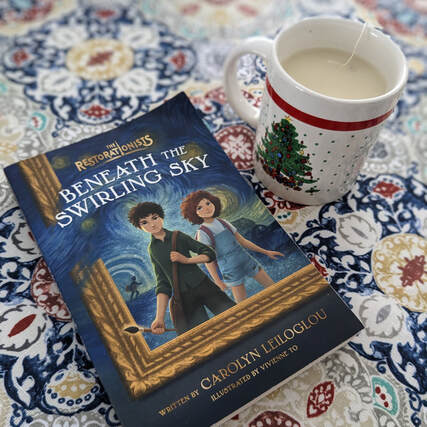
 Hello, friends! Please welcome Carolyn Leiloglou, author of Beneath the Swirling Sky, Book One of The Restorationists series. Besides being a fellow author and art-lover, Carolyn is a homeschooling mom; I discovered throughout this interview that we have a lot in common! As I write my interview questions and read responses, I like to imagine that the author and I are enjoying a cup of tea together at my kitchen table… In this case, it's probably a good thing it was actually over email, because I can guarantee my Restorationist-fan children would be keeping Carolyn busy with lots of questions of their own!
FEH: Welcome, Carolyn, and thank you for agreeing to this interview! Beneath the Swirling Sky was one of my family's favorite reads of 2023 (I reviewed it here). I also want to start out by sharing that Beneath the Swirling Sky is one of my ten-year-old daughter's very favorite books. She is dyslexic, so the act of decoding words is still a challenge for her, but she wanted a hard copy of your book after we listened to the audio version together, so she could go back and re-read her favorite parts whenever she wanted. It's been such a special experience for us to share. We are SO picky about art-themed books in my house, because my husband is a professional artist. So often, artists in literature are surrounded by a strange sort of mystique, overlooking the hard work and practice they put into their works. Your story portrayed art and artists in a way that even this very choosy family could get behind. :) Which leads to my first question: Are you a visual artist yourself? CL: Before I answer, let me just say how encouraging it is for me to hear that your daughter with dyslexia wanted a physical copy of the book! I’ve had a few families with dyslexic kids tell me their kids read and love Beneath the Swirling Sky, and it means a lot to me because two of my own children have dyslexia. I think books with adventure and character depth help pull them in (and I’m sure the illustrations help too in this case)! To answer your question, no, I’m not a visual artist myself. However, I grew up around a lot of art and familiar with artists and artistic concepts. My mom was an art major and taught high school art for several years, and my grandparents were art collectors. In fact, Uncle Leo’s house in Beneath the Swirling Sky is loosely based on theirs! FEH: Of course you cover this thoroughly and poignantly in your story, but what are some of the ways you believe art can influence the world and each individual? Do visual arts have a unique role in that? CL: One of the ways art can influence us is to bring to light beauty. It can also help you see things in a new way. Visual art specifically forces you to slow down to truly experience it, which feels like a rare gift in our hurry-to-the-next-thing culture. FEH: (Yes! I love that and totally agree. The ability art has to help us slow down is often overlooked.) The villains in your story damage art and attempt to pollute it with their evil ideas... but you also mention real-life damage to artwork. What would you say regarding those who risk the destruction of (or actually destroy) masterpieces to magnify their own voices? CL: I wonder if you’re referring to the protesters who have repeatedly assaulted various paintings over the last few years and now have apparently actually damaged one. I certainly don’t think the way for anyone to get a point across would be to harm irreplaceable paintings by some of our world’s greatest artists. It’s misguided, to say the least. But perhaps it had helped some people realize how precious these objects are. Their stunts have sent more people than ever to museums by reminding us of the frailty of art and our inability to truly protect it while also sharing it with the world. FEH: (That's a very encouraging way of looking at it! Anything that helps us to consider the value of artwork isn't a total loss.) From visual arts to word arts... Can you share a little about why you love writing and how you started writing? CL: I’ve always wanted to be a writer. I was making up poems long before I could spell, and I started writing my first novel in the fourth grade. However, somewhere around middle school, much like my main character Vincent, I lost confidence in my art. Tragically, I stopped writing stories until I had kids of my own (though I never totally gave up on poetry). It makes me sad to think about how many years I wasted not writing because I thought I wasn’t good enough. But you can never actually get “good enough” without doing the work. I hope my story inspires kids not to give up on whatever art form they love. FEH: Here is a question from my daughter, Maddie: if you could choose any of the artists you talk about in your book to illustrate it for you, who would it be? CL: Well, it’s hard to beat the amazing art that Vivienne To created! Her illustrations, especially the cover, really blew me away, and I feel so blessed that she chose to take on this project. But if Vincent van Gogh wanted to illustrate my book, who am I to say no? FEH: (We loved Vivienne's illustrations, too! They were the best part of getting a physical copy of the book after having enjoyed it on audio.) If you could host a dinner with one artist and one writer (dead or alive!) who would you choose? CL: This feels like a sneaky way to ask who my favorites are… I think I’d have to pick Vincent van Gogh for the artist because I love so many of his paintings and he had so much to say about art and life in his letters to his brother Theo. (Though I just came across a treasure trove of quotes from Henry Ossawa Tanner while researching book three, so he’s my close second). And how can I not pick C.S. Lewis as the author? I think I’d just sit back and soak in the conversation the two of them would have and just keep refilling their tea cups. FEH: Finally, what is some of the best writing advice you ever received? CL: It’s not the most talented writers who necessarily succeed. Its the most persistent. If you want to be a writer, keep at it! FEH: Thank you so much for joining us, Carolyn, and thank you for writing your beautiful story. We are so looking forward to Book 2!! CL: Thank you for having me! Book 2, Between Flowers and Bones, is up for preorder now!
0 Comments
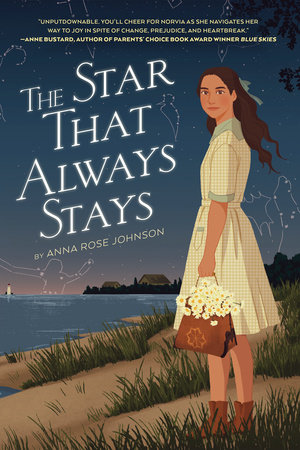 Today, for Marvelous Middle Grade Monday, I'm so happy to welcome one of my favorite new authors for an interview! Please give a hearty welcome to Anna Rose Johnson, author of The Star that Always Stays. FEH: The Star That Always Stays is such a beautiful, believable immersion into a time and family. How did you go about your research? Did you read through family stories first, or research the time and place separately? Or a little of both? ARJ: Thank you so much! The writing and research were very interwoven. Between every draft, I would research and learn more and come back with more background and insight each time. I already knew a good deal about Norvia when I wrote draft one, but my further research deepened my knowledge of her family and details about her life. It was fascinating to dig deeper and come to know her better as a person while looking through her photo albums and finding newspaper articles about her. It was delightful to learn that tidbits I invented about Norvia, Dicta, and Vernon were actually surprisingly accurate. ☺ FEH: Was it hard (emotionally) to put yourself into your great-grandmother’s shoes as you wrote, knowing the difficulties she had to go through? ARJ: I’ve definitely thought a lot about how hard this time must have been for my great-grandmother and her family. I can only imagine the difficulties that must have gone along with adjusting to a new life. That’s why it’s lovely to know how much she came to care about her stepfamily, and how they cared about her—that element was very real. 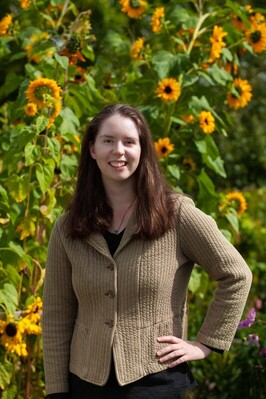 Photo copyright Daniel Johnson FEH: Was there anything you learned in your research that you wished you could have included but didn’t?
ARJ: I would have loved to include more about Norvia’s extended family and the stories of her ancestors—which are so fascinating—but there just wasn’t enough space in the story to explore them further. I did the best I could to include interesting research where I could! FEH: One of my favorite things about TSTAS was how you included so many of my favorite old, vintage books. Do you know if Norvia may really have read any of them? ARJ: Unfortunately I don’t know, but from reading Norvia’s writing, I would say she had a way with words—which might indicate that she was a reader! FEH: If you were to recommend a book or series to a reader who wanted to dip their toes into vintage book reading, what would it be? ARJ: I would start with one that’s light and fun and not incredibly long, like Two Little Women and Treasure House by Carolyn Wells, which I first read when I was eleven and loved so much! I really wanted to include it in TSTAS, but it wasn’t published until 1916! I’ve read several vintage mysteries by Augusta Huiell Seaman, which could be a good place to start as well--Mystery on Heron Shoals Island was especially a favorite. FEH: What’s some of the best writing advice you’ve ever received? ARJ: Be willing to rewrite and revise your story and make significant changes. Nothing has been more instrumental to my writing than being able to look at a project to see how it could be improved, and finding editors and mentors to help me along the way. FEH: Thank you so much for joining me for this interview, Anna Rose. I can’t wait to read all your future stories, and I hope more and more readers find their way to this one! ARJ: I am so grateful! Thank you! *** For more Middle Grade recommendations, visit Always in the Middle! 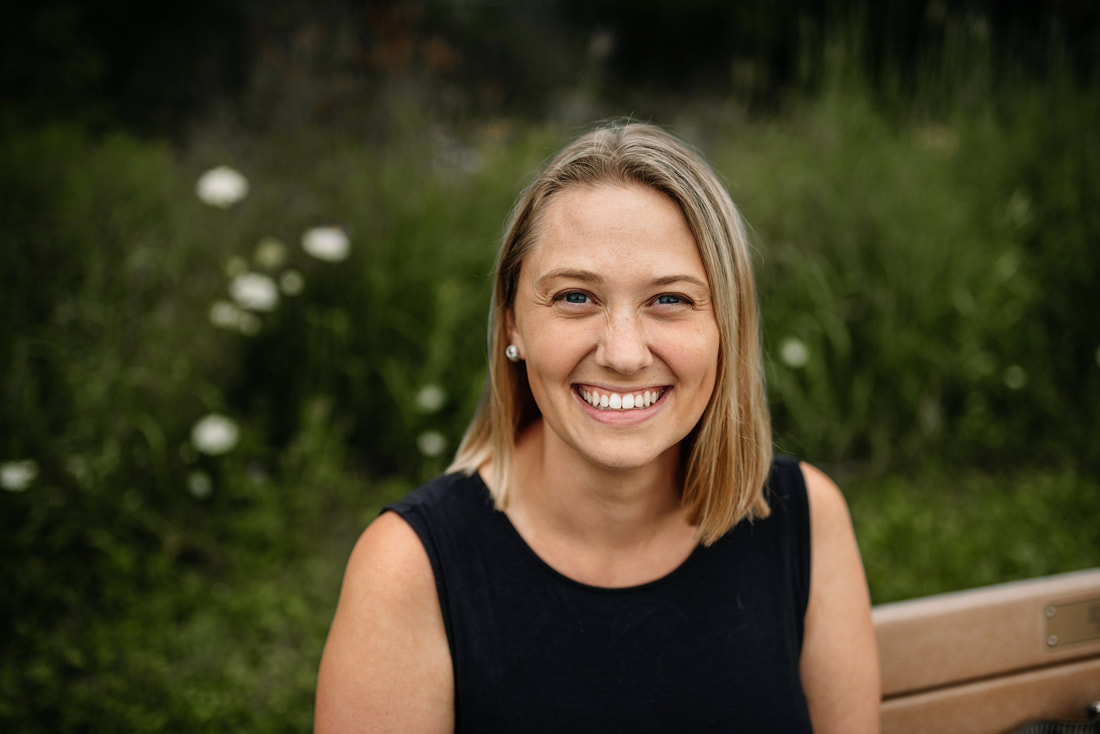 Today I'm thrilled to welcome Claire Swinarski, author of the middle grade novel What Happened to Rachel Riley?, as well as other books for children and adults. Rachel Riley was one of my favorite middle grade reads of 2022, so I'm thrilled that she agreed to join us to answer a few questions about herself and her writing. Welcome, Claire! FEH: I have read and loved your adult non-fiction, and I see you have an adult novel coming out soon (congratulations!), but most of your books are middle grade. What draws you to middle grade books? What do you find most challenging about writing for this age group? CS: Thank you so much! I love middle grade books because of how much they meant to me as a kid. At the point in our lives where we're focusing on middle grade novels--ages 8-14ish--we're going through so many questions about who we are, what we believe, who we can trust, etc. So those books that can help you articulate and answer those questions just tend to stick with you your entire life. Ask someone which books have changed their lives and given them really profound reading experiences: often you get answers like Maniac Magee or Anne of Green Gables or Roll of Thunder Hear My Cry. All middle grade books. (FEH: Anne of Green Gables is my answer for sure; I definitely agree here.) CS: That being said, there are definitely challenges of writing middle grade. For me, the main thing is just keeping the voice realistic. Things like slang and technology practices are always shifting and changing. I didn't mention TikTok at all in my first middle grade; the one I'm currently working on mentions it constantly because that's what 12-year-olds are doing on their phones. You have to stay really up to date in order to sound realistic, if that's what your going for, and since my books are contemporary, realistic fiction, it's essential for me. It's also tricky to not come across as "preachy"--I can't stand preachy books, and it's so easy to fall into the idea that I have some kind of message I need to get across when really, I just want to focus on telling a good story. FH: One of my favorite parts of What Happened to Rachel Riley? was the family dynamic. You created such a loving and believable part-Polish family—and as a member of one myself, I found so much of it relatable! So, two questions springing from that: a) What is your favorite Polish food? CS:My favorite Polish food is definitely sauerkraut pierogi--SO good. and, b) Who is your favorite fictional family? CS: As for my favorite fictional family, I think I'd fit in pretty well with the Weasleys! (FEH: Cool--I've been told my family is basically the non-magical version of the Weasleys, except we have lots of girls and only one boy. So if you're ever in New England, you can come hang out with us and eat sauerkraut pierogi. ;) ) 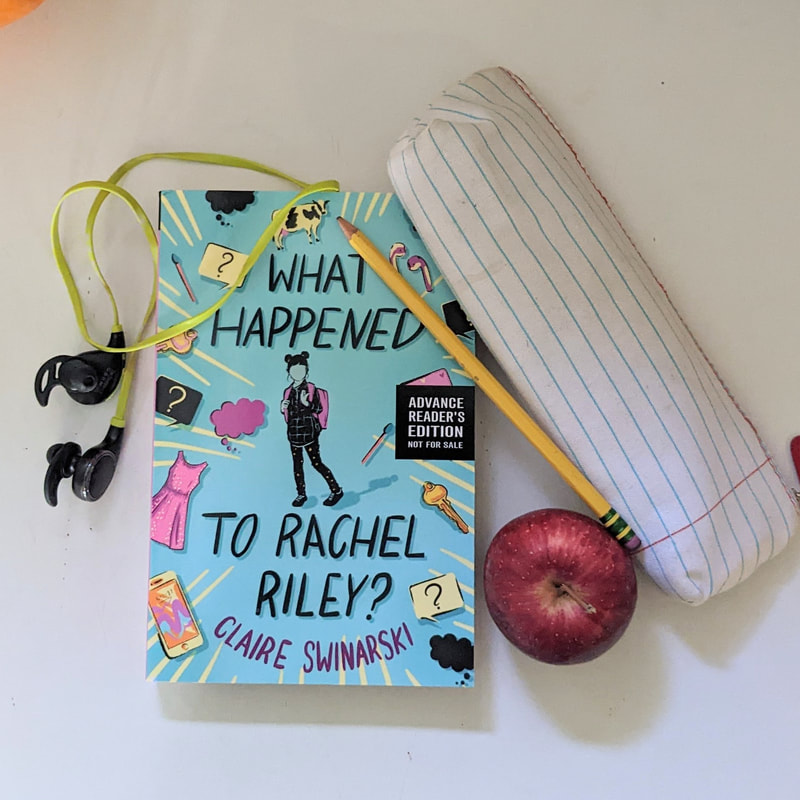 FEH: Your books seem to be unashamedly “issue books,” in that the characters deal with some heavy circumstances (eating disorders, bullying, harrasment). But unlike some heavy-handed issue books, yours always seemed to let the story and characters shine while the issues remained the circumstances that sometimes moved the plot forward. Was this hard to balance? I imagine that those difficult issues must be on your heart a great deal, so how did you keep them from taking over?
CS: Like I said earlier, it's so important to me to not have my books become one big PSA. Beverly Cleary, one of the all-time greats, once said something along the lines of authors shouldn't start a book with a message in mind. They should tell a story, and not be trying to teach anything since kids learn enough stuff in school. I love that. So I really try to focus on realistic worlds and find that that allows for messiness and surprises. I started writing about sexual harassment in Rachel Riley because when I remembered my middle school days, that's what I remembered--not because I wanted to lay out a roadmap for what kids should do. If they read the book and feel inspired and implement action in their own schools, great. But I'm not out here trying to tell kids what to do. FEH: Speaking of balance, you have quite a balancing task going with your writing and mothering. Any advice or words of encouragement for other mamas trying to be the best mothers and makers they can be? CS: The balance of writing and motherhood isn't really a balance at all, but more of a holy alchemy. My kids make my writing so much better. They force me to write quickly, and to learn not to let perfection be the enemy of the good, because I simply don't have 8 hours a day to perfect my word choices or sentence structure. My interactions with them also constantly lead to big, deep emotions--gratitude, frustration, joy, delight, anger. By tapping into these emotions on a regular basis, it becomes much easier to pull from them when it's time to write! (FEH: This is amazing! I love the term "Holy Alchemy" for this interplay. I'm always going to think of it that way now.) CS: If you feel like you can't make time in your schedule to write, try and get creative. Remember that literally nobody will notice if your baseboards haven't been cleaned or the socks have started living in the laundry hamper. It's so good for kids to see their moms embrace passions and create art. Jesus was the master storyteller, after all, and when we participate in the act of storytelling, it's another way of emulating Christ. FEH: Finally, the question I love asking everyone: What’s the best writing advice you’ve ever received? CS: The best writing advice I've ever received is from a book called Bird by Bird by Anne Lamott. I don't read many writing-craft books because I've found they get in my head and slow down my process, but I do always recommend Bird by Bird to people because it's that genius. Anne Lamott writes about--and I'm cleaning up the language a bit here--crappy first drafts. She reminds us that you can't edit nothing, but you can absolutely edit a terrible first draft. So let your first draft be awful! You're just trying to get the words down on the paper. You can always, always, always go back and clean them up. If someone read my first drafts, I'd be completely mortified. They are honestly so horrible. But with no crappy first draft, I'd never get to the writing that I'm most proud of, like the final product of What Happened to Rachel Riley. FEH: Thank you so much for joining me, Claire! Congratulations on all the success Rachel has had, and on all your new projects in the works! Everyone, please welcome Haley Stewart to our corner of the internet today! Haley is the author of several books; most recently, her adult non-fiction Jane Austen's Genius Guide to Life and her early reader "Sister Seraphina Mysteries," The Pursuit of the Pilfered Cheese and The Curious Christmas Trail. All three were among my favorite books from 2022. I am so excited to host her today so you can all get to know her a little better. 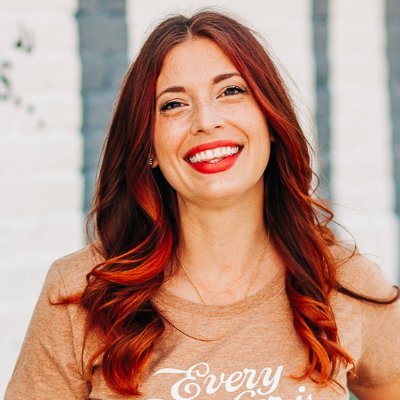 FEH: Hello, Haley! Can you tell us a little bit about your recent books and any new projects you're excited about? HS: Sure! In the spring, my new book from Ave Maria Press was released: Jane Austen's Genius Guide to Life: On Love, Friendship, and Becoming the Person God Created You to Be. It explores what we can learn from Jane Austen's wonderful novels about cultivating virtue: what virtue (and vice) look like, how we might develop the virtues (and what holds us back), and how the people God places in our lives can help us to become more holy. Austen is such a brilliant novelist but she's also a moral philosopher diving into the big questions of life and what it means to be a good person. And I tell plenty of personal anecdotes along the way about how much she has taught me! The other big project I'm excited about are my new series for young readers, The Sister Seraphina Mysteries. 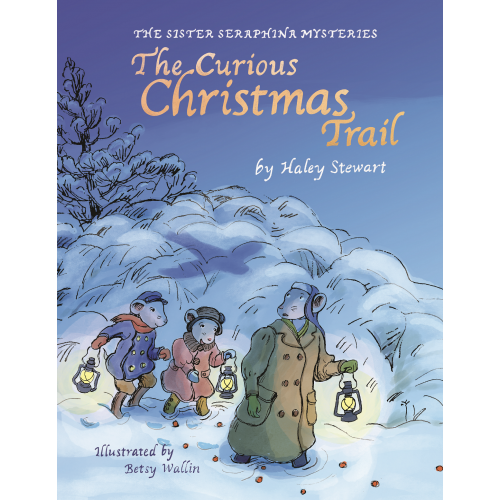 They're about an order of mouse nuns (the Sisters of Our Lady Star of the Sea) who live in an abbey underneath G.K. Chesterton's house in England. They run a school for village mice and, inspired by Chesterton's Father Brown mysteries, start solving local crimes. In the first book, The Pursuit of the Pilfered Cheese, the sisters (and two eager students) ride their tiny bicycles to London to investigate the theft of the prize cheese meant for the school fundraiser. And in the second book (my favorite of the series), The Curious Christmas Trail, Sister Seraphina and her friends must find Sister Dymphna, one of the senior nuns, who has started wandering off and becoming disoriented. All the excitement takes on Christmas Eve on the night of the Nativity Play and the Christmas feast! FEH: I loved all your insights in Jane Austen's Genius Guide to Life. Even though I'm a diehard Austenite and have read most of her books multiple times, your focus on virtue and vice made me think about aspects of the stories I'd completely missed. Was this something you naturally made the connection with while reading, or was there a moment that pointed you in that direction? 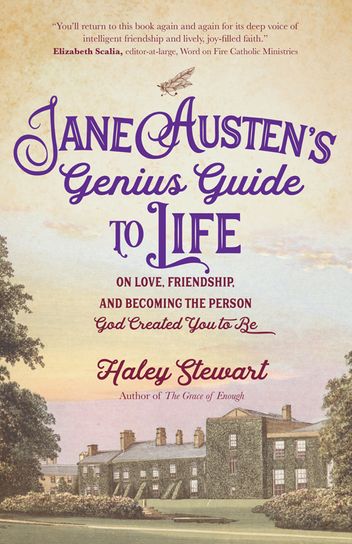 HS: I've been really interested in Austen as a moral philosopher since taking a wonderful class with Dr. Margaret Watkins my senior year at Baylor University. We read all of Austen's novels through a philosophical lens. Ever since, I've been really interested in what Austen can teach us about vice, virtue, and what it means to live a good life. FEH: I read that you got the idea for your mouse nuns book in a dream. I think that's every author's, well, dream! What was your process like bringing that from the seed of an idea to a full fledged plot? HS: I let the idea simmer for several months and then I just decided to try it out. I started out with one character in mind and then a second. Pretty soon I had a full cast of characters! I started writing without knowing how the mystery would unfold or who the villain might be. I just followed my little mice around from scene to scene. I love writing but it's usually a bit of a slog to get through a book project. For these books, the whole process was a joy! FEH: How does your faith influence your creativity? HS: This is a hard question to answer because it's hard to imagine any way it doesn't influence my creativity. Everything from the kind of art I want to create to what I think it means to be a creative are all connected to my faith! FEH: I'm not mean enough to ask you to name your favorite book, but are there particular books that inspired you? If you could write a book that was *like* any book, what would it be?
HS: For fiction I'm always inspired by Madeleine L'Engle. I love the way her books explore complicated ideas of faith, science, and relationships without being preachy. I'm also hopelessly devoted to both Lucy Maud Montgomery and Jane Austen's characters. They are so life-like! FEH: Okay, and a few super quick questions just for fun! Would you rather live in Narnia, Middle Earth (at peace), or Pemberley? HS: Oh my, what a difficult choice! It's hard to pass up Middle Earth, but I'm afraid that I'm a Pemberley sort of person. FEH: Favorite ice cream? HS:Coffee! FEH: Favorite Doctor of the Church? HS: St. Hildegard of Bingen FEH: Last book you binge read? HS: Laurus by Eugene Vodolazkin FEH: Pumpkin spice or apple cider? HS:Very basic pumpkin spice. FEH: Thank you so much for the interview, Haley! I loved learning a little bit more about you and your books.
Welcome to the Blog Tour for The Secret Garden Devotional by Rachel Dodge, hosted by JustRead Publicity Tours! ABOUT THE BOOK Title: The Secret Garden Devotional Title: The Secret Garden Devotional
Author: Rachel Dodge
Publisher: Barbour
Release Date: December 6, 2022
Genre: Devotional
Devotional Inspiration from Mary Lennox's Beautifully Mysterious Secret Garden The Secret Garden Devotional offers lovely inspiration that explores the themes of faith, family, contentment, wisdom, and joy in the classic Frances Hodgson Burnett novel, cherished by generations of readers.
Each reading corresponds with a chapter from the book and invites you to embrace God’s guiding hand in your life as you are becoming His new creation. With themes of growth, spiritual nourishment, God's love and care, and His transforming power, this beautiful chapter-by-chapter devotional includes original artwork throughout. Each reading includes examples from the novel, scripture, life application, and prayers perfect for groups, book clubs, or personal reflection.
PURCHASE LINKS: Goodreads | Amazon | Barnes & Noble | Book Depository | IndieBound ABOUT THE AUTHOR
Rachel Dodge is the bestselling author of the award-winning Anne of Green Gables Devotional, The Little Women Devotional, and Praying with Jane: 31 Days Through the Prayers of Jane Austen. Rachel's newest book is The Secret Garden Devotional! Rachel teaches college English classes, gives talks at libraries, teas, and book clubs, and is a writer for the popular Jane Austen's World blog. She is passionate about encouraging and equipping women to grow closer to Jesus through prayer and the study of God's Word. A true kindred spirit at heart, Rachel enjoys books, bonnets, and ball gowns. Connect with Rachel by visiting racheldodge.com to follow her on social media or subscribe to email newsletter updates. TOUR GIVEAWAY(2) winners will receive a signed copy of The Secret Garden Devotional and a hardcover illustrated copy of The Secret Garden along with a bookmark and stickers.  Full tour schedule linked below. The giveaway begins at midnight November 30, 2022 and will last through 11:59 PM EST on December 7, 2022. Winner will be notified within 2 weeks of close of the giveaway and given 48 hours to respond or risk forfeiture of prize. US only. Void where prohibited by law or logistics. Giveaway is subject to the policies found here. Follow along at JustRead Tours for a full list of stops!  Thanks for following along with the blog tour for this book! Rachel kindly agreed to join us for an interview to discuss The Secret Garden Devotional. Welcome, Rachel!
|
About meHi! I'm Faith. I blog about books and creativity, family and faith. Welcome! Archives
November 2023
Categories
All
|


 RSS Feed